Email
Phone
Our Python for Kids program teaches the core concepts of programming, such as variables, loops, and conditions, through fun, interactive projects. Kids don’t just watch, they create and code their own games and tools.
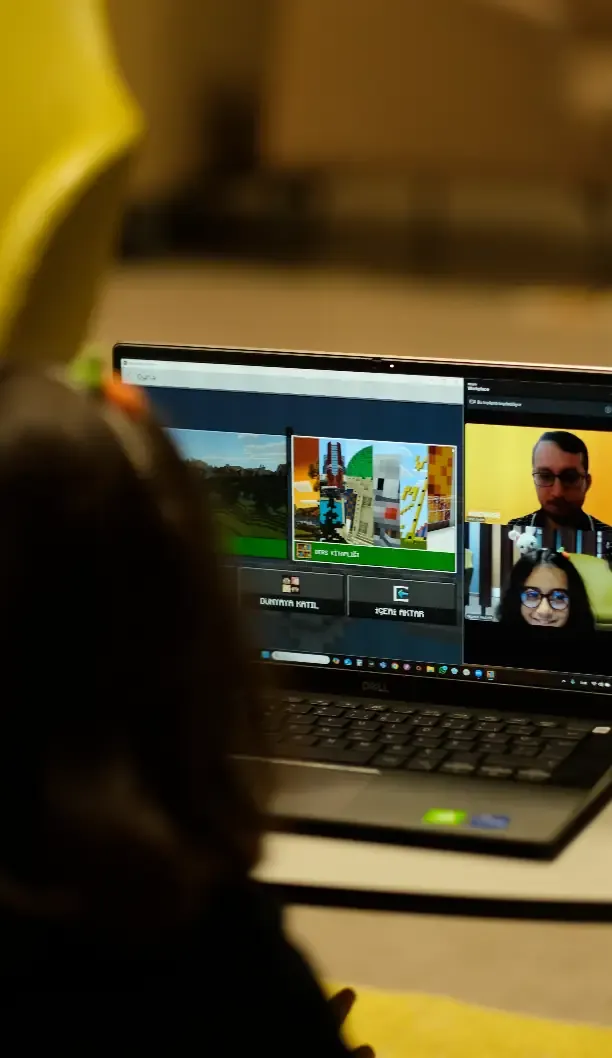
Designed for kids aged 10 and up, this course is taught in small group live classes where experienced instructors give each child one-on-one attention during lessons. Learning is project-based, interactive, and tailored to each child’s pace.
Ages 10+
32 weeks · extendable with continuation levels
1-hour live session per week
5–8 students by age
32 lessons
First trial lesson is free
Weekly progress report + lesson recordings
Awarded on program completion
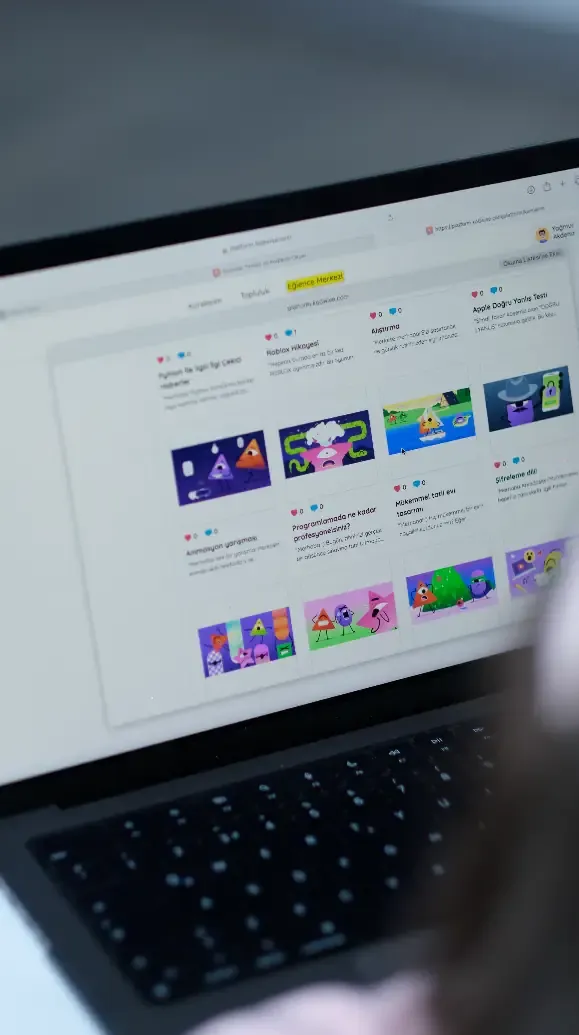
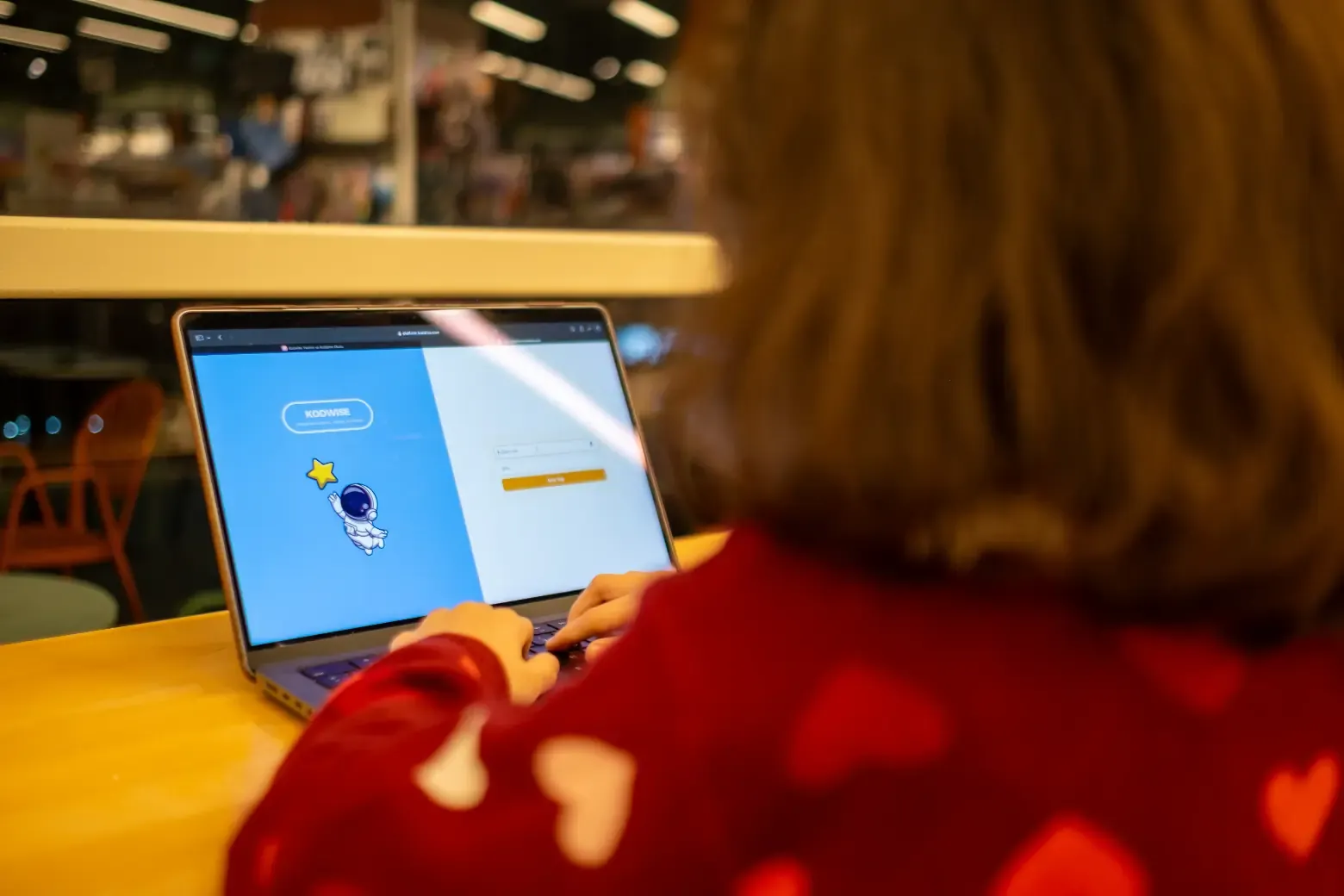
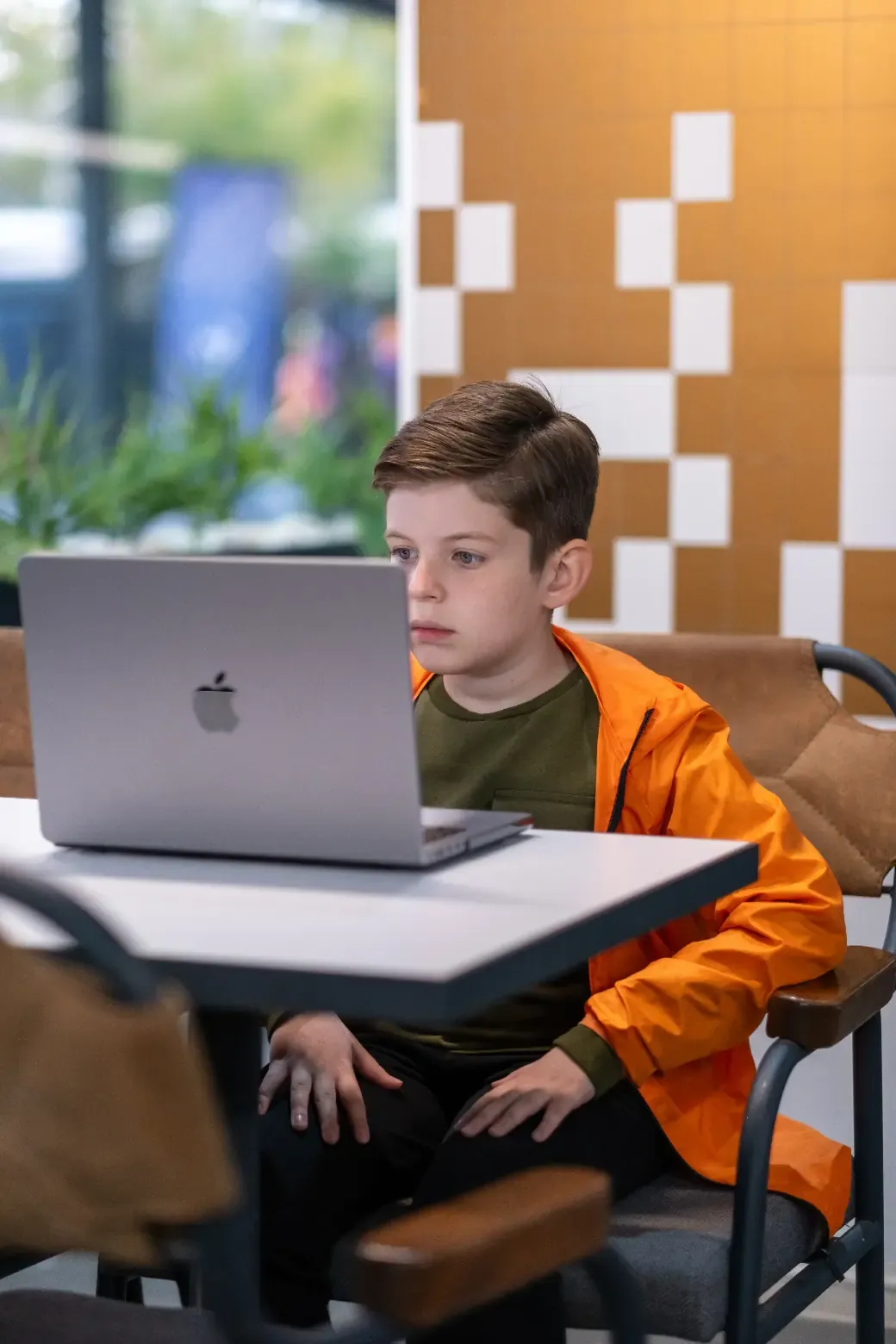
Python is one of the most human-readable programming languages in the world: a line of code that does something looks remarkably like the sentence that describes it. That makes it the gentlest on-ramp for a child’s first step into text-based coding, and the place where kids write their very first lines on a real keyboard.
It is also a genuine career language, used everywhere from data science and AI to web development and automation. What children learn in this program is not “kid coding”: it is real Python, the same language professionals use, taught through age-appropriate projects.
The program consists of 4 modules and 32 lessons, about 8 months at one lesson per week. Every module closes with a working project, so by the end of the journey your child has real, demonstrable work to show.
The basics take root: variables, numbers and text, taking input from the user, type conversion and conditionals. By the end of the module, kids are writing programs that make decisions with if/else and combining logical operators. Code is written from the very first weeks; theory is learned inside practice.
Kids build their first real project: a console game. They then present it to the class and receive feedback; presenting is a deliberate part of the curriculum, not an afterthought. Lists and for loops arrive in this module, which closes with the first group project built together with classmates. The classic scene of this module is always the same: the number-guessing game says “You got it!” for the first time, and the child realizes the rule that just worked is one they wrote themselves. For most kids, that is the exact moment keyboard anxiety ends.
Students learn to organize code with functions and dictionaries, and use the math and random modules. Then Turtle enters the picture: drawing on screen with code, where abstract lines become a visible creation. The module ends with a group project that draws patterns with loops.
Real game development begins with Pygame: keyboard controls, collision detection, game assets. Each child designs their own game, tests it, improves it with feedback and presents it at the closing of the term. A journey that started in a plain console ends with a playable game on screen.
The program is designed for ages 10 and up, with classes split by age band: at most 5 students at ages 10-11, at most 6 at ages 12-14, and at most 8 at ages 14-17. The curriculum follows the same backbone, but pace and examples are adapted to each group.
Two profiles fit perfectly: children who have completed a block-based environment like Scratch and are ready for text-based code, and children with no coding background whose age and keyboard comfort are ready for a direct start. The clearest answer to “which one is my child” emerges in the free trial lesson.
All classes are live and online: one day a week, one hour. This is not a pre-recorded video course. The instructor is present in every lesson, and thanks to the small group size gives each student one-on-one support during class. Access to lesson recordings is included, so a missed week never becomes a lost week.
Parents never have to guess how things are going: a progress report is sent every week. Academy PRO access is also included for the duration of the package, so kids can practice outside class with the Kodmigo AI assistant and build unlimited projects.
The journey starts with a free trial lesson of about 45-60 minutes, with no purchase obligation: the instructor gets to know your child and assesses their level together with you. After the trial, the right program and age group are confirmed, your child settles into a fixed weekly class time, and the journey begins.
This program is not an endpoint; it is the first link in a chain. Students who complete Python Basics can deepen their skills with Python Pro and Web Design with Python, and the AI & Data Science program is built directly on the Python foundation laid here. Next levels are never sold separately: when a student completes the program, the instructor recommends the next step and the plan is made together with the family.
Every student who completes the program receives a certificate of participation named after the program; the lasting outcome is the project portfolio built along the way: working games, drawings and team projects.
See what parents think about our programs for children aged 7-17: coding, robotics, AI and game development. Book your free trial lesson today!
Yasemin Akdeniz
"While looking for an educational program where my daughter could turn her screen time into meaningful learning, I came across Kodwise. Even from the very first trial lesson, it felt like the right choice. The quality of the instructors and the rich, well structured content are truly excellent. So glad we found Kodwise."
Ayfer Sezgin
"At first, I thought this would be just another activity to keep my child busy. But our instructor immediately made us feel comfortable, as if we had been taking lessons for years. We are now looking forward to continuing with great excitement."
Onur Özel
"After dealing with foreign platforms that relied on aggressive sales tactics, we came across Kodwise. Throughout the trial lesson, everything was completely information focused, with no pressure at all. We were very satisfied with both the instructor and the program. We are truly happy to be part of the Kodwise family."
Fatma Yörükoğlu
"We discovered Kodwise while researching ways to make our 8 year old daughter's screen time more productive. Seeing the progress she has made since the very beginning has been truly priceless."