Email
Phone
Our Scratch coding course helps children aged 7-11 learn programming by creating games, animations, and stories. With our live online classes, kids explore logic, creativity, and storytelling, all through play.
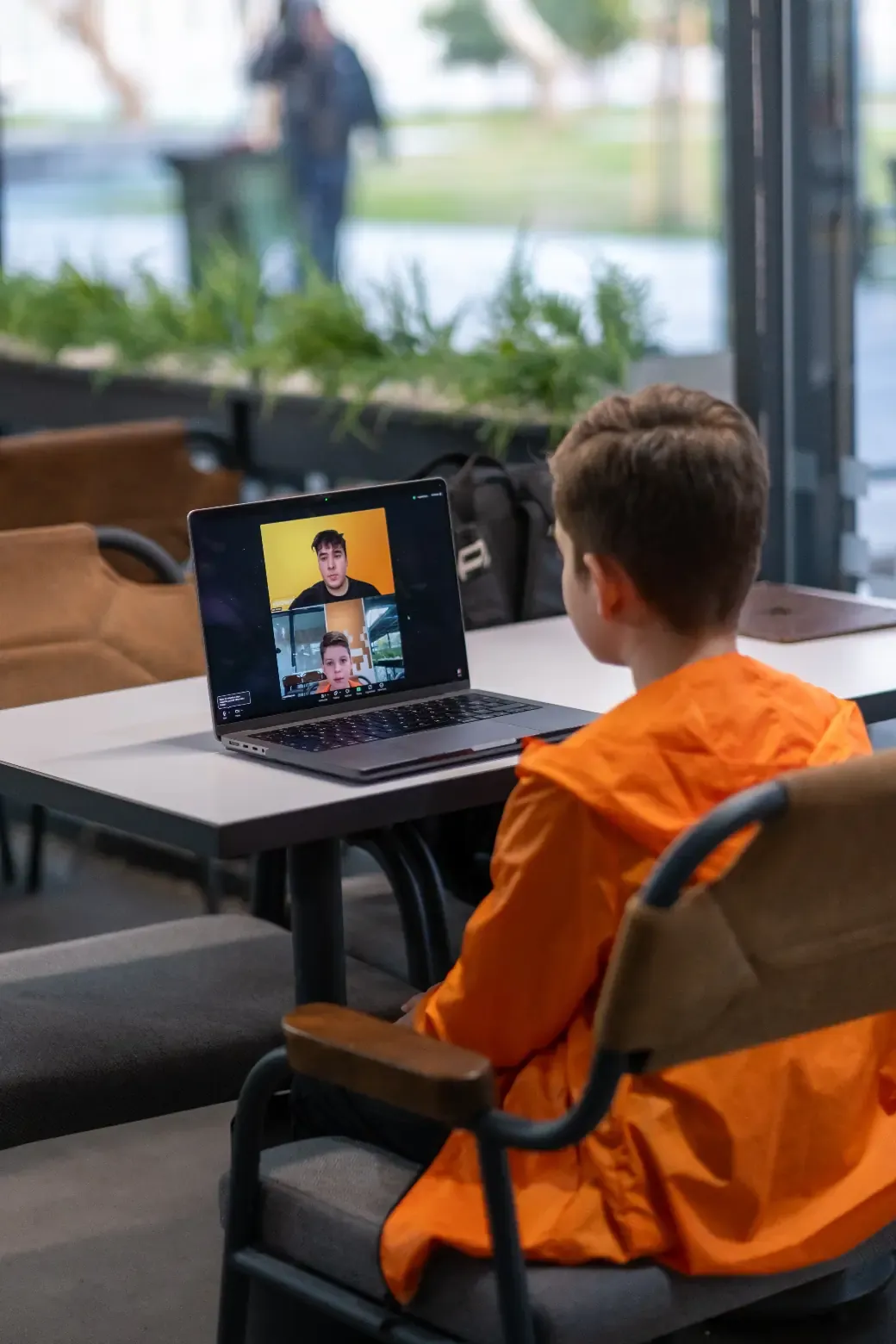
Designed for children aged 7-11, this course combines creativity with computational thinking. Students design characters, scenes, and animations while learning coding logic through the Scratch platform developed by MIT.
Ages 7-11
32 weeks · extendable with continuation levels
1 live online lesson per week (1 hour)
Max 4 students
32 lessons
First trial lesson is free
Weekly progress report + lesson recordings
Awarded on program completion
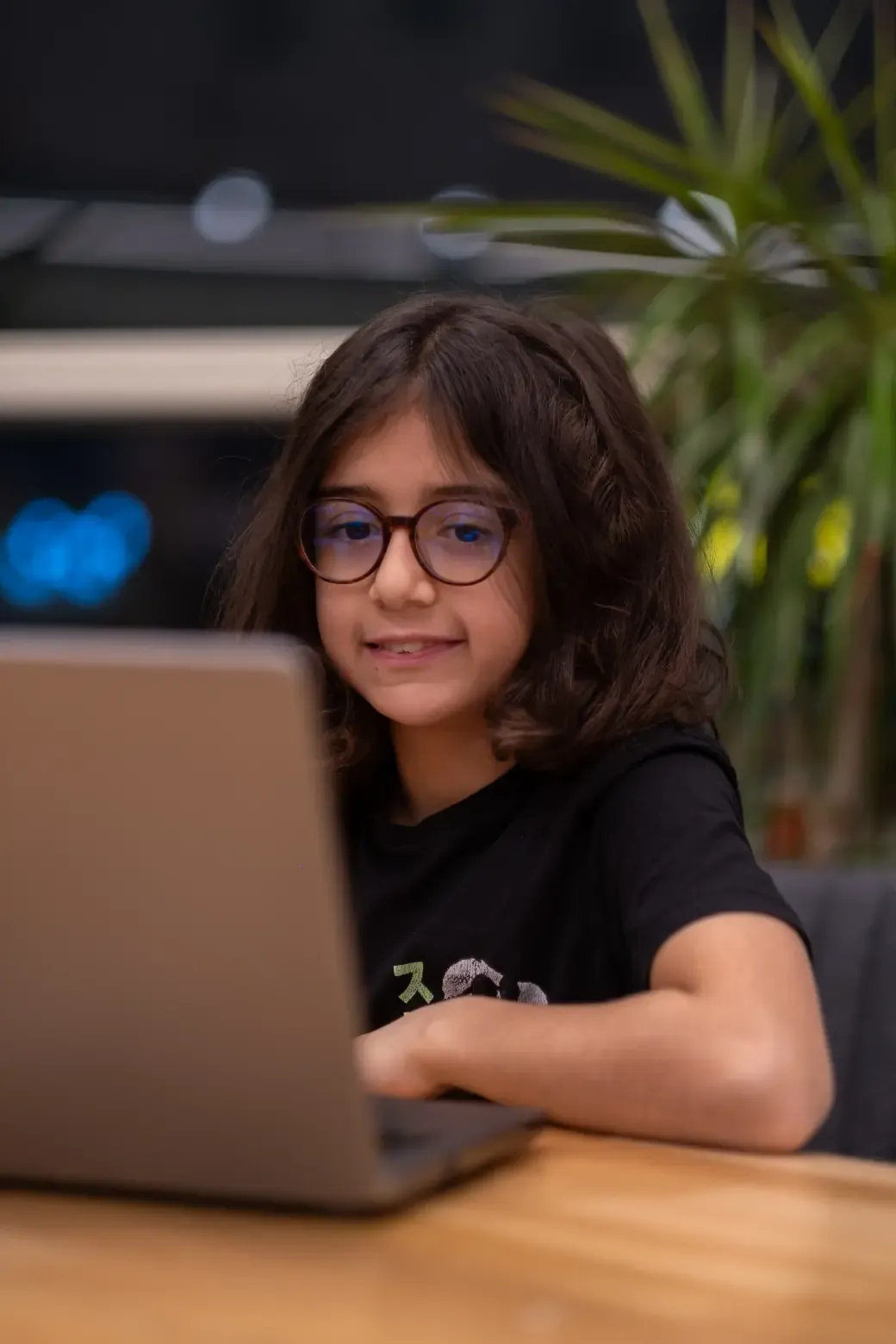
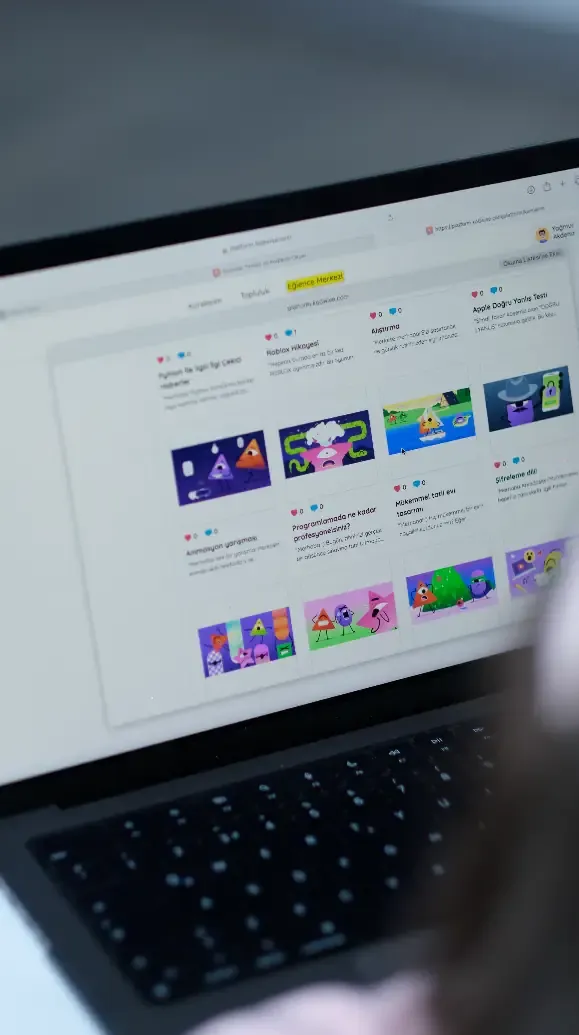
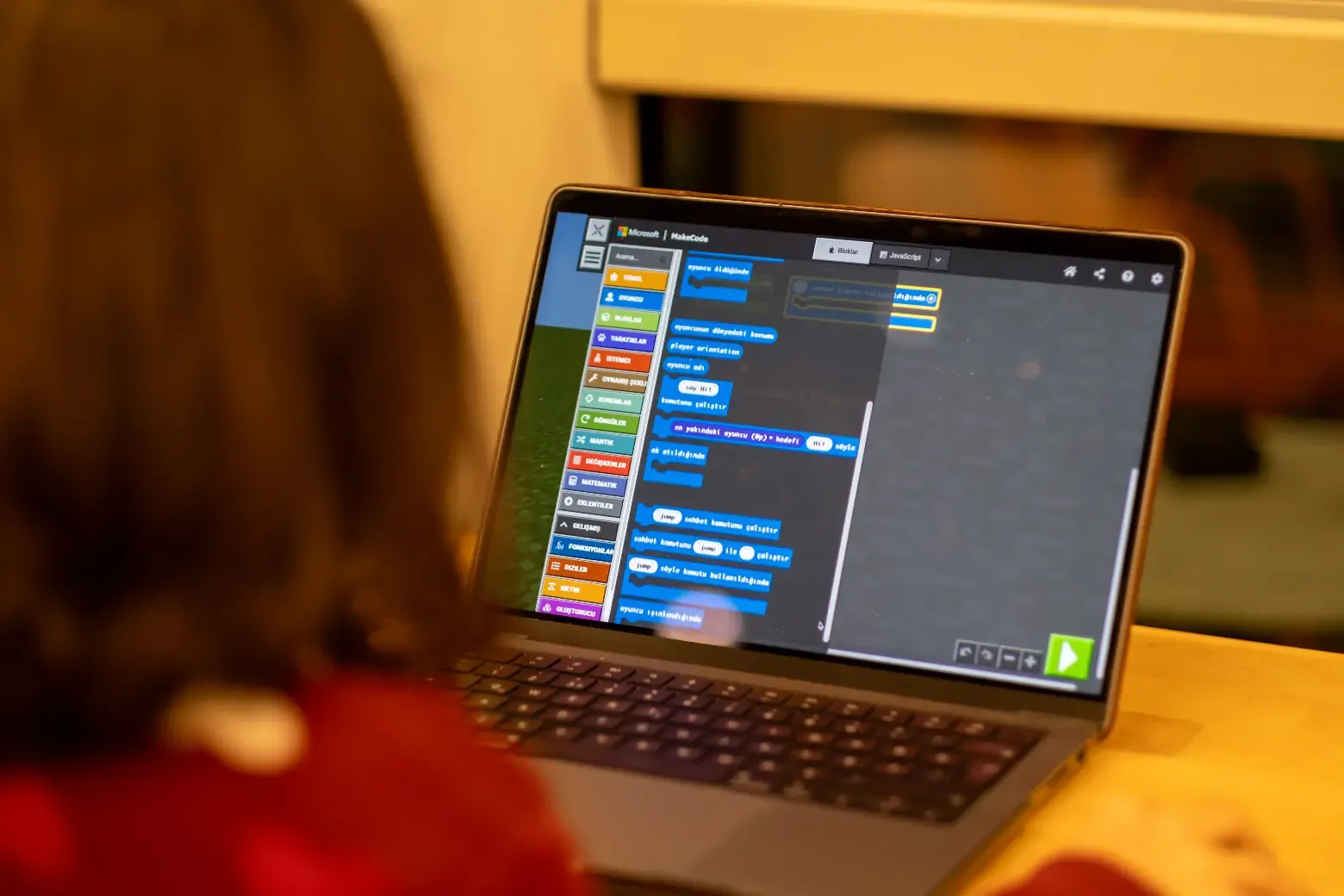
Scratch, developed by MIT, is a visual programming environment where kids build command sequences by dragging blocks instead of typing text. Because there is no typing barrier, a child who can read can move their own character in the very first lesson, and algorithmic thinking takes root early.
Do not let the simplicity fool you: the sequencing, loop, condition, event and variable concepts learned in Scratch are the shared foundation of every real programming language, Python included. The block environment makes these concepts visual; when the child later switches languages, the concepts travel with them unchanged.
The program consists of 4 modules and 32 lessons, about 8 months at one lesson per week. Every module closes with a finished project.
It starts with blocks, characters and scenes. Kids build animations with movement, costumes and sound, learn event blocks, and make two characters talk to each other. The module ends with their own Maze Game. Along the way they find and fix bugs in three ready-made projects; the debugging habit starts here.
Kids learn to define their own blocks, the block-world equivalent of functions in programming. They work with clones, send messages between characters, and build game logic with random numbers and sensing blocks. They also draw with code using the pen library.
Real game development begins. In Space Hunter, kids code the rocket, meteors and firing mechanics with sound effects. Then Forest Adventure starts: a large map of 23 connected backdrops and 11 interacting characters. As the project grows, planning and patience become part of the curriculum too.
Forest Adventure is finished and published; then comes an animated film project built from 26 backdrops and 16 characters. The final lessons are devoted to the graduation project, which each child presents with parents in attendance. At the end of eight months there are no promises, only demonstrable work.
The Scratch program is designed for ages 7-11, and classes across this entire age band have at most 4 students, so the instructor reaches every child’s screen in every lesson. For ages 7-9, Scratch is the clear right start; at ages 10-11 the choice between Scratch and Python depends on the child’s keyboard comfort, and the clearest answer emerges in the free trial lesson.
There are no prerequisites: being able to read is enough. The program suits children meeting a computer for the very first time; mouse skills develop naturally in the first lessons.
All classes are live and online: one day a week, one hour. This is not a pre-recorded video course; the small class means the instructor gives each student one-on-one support during the lesson. Access to lesson recordings is included in all packages, so a missed lesson can be watched later.
Parents receive a progress report every week. Academy PRO access is included for the duration of the package: kids practice outside class with the Kodmigo AI assistant and collect their projects in their own Academy space.
First comes the free trial lesson, about 45-60 minutes with no purchase obligation: the instructor meets your child and you see their readiness together. Then the right age group is confirmed, your child settles into a fixed weekly class time, and the journey begins.
Scratch is not a destination; it is the first link of the road. For a child who completes the program, the natural next step is the Python program: the logic built with blocks is now used to write real code. The timing of that transition is planned with the instructor at the child’s own pace.
Every student who completes the program receives a certificate of participation named after the program; the lasting outcome is the portfolio built across the term: games, animations and the graduation project.
See what parents think about our programs for children aged 7-17: coding, robotics, AI and game development. Book your free trial lesson today!
Yasemin Akdeniz
"While looking for an educational program where my daughter could turn her screen time into meaningful learning, I came across Kodwise. Even from the very first trial lesson, it felt like the right choice. The quality of the instructors and the rich, well structured content are truly excellent. So glad we found Kodwise."
Ayfer Sezgin
"At first, I thought this would be just another activity to keep my child busy. But our instructor immediately made us feel comfortable, as if we had been taking lessons for years. We are now looking forward to continuing with great excitement."
Onur Özel
"After dealing with foreign platforms that relied on aggressive sales tactics, we came across Kodwise. Throughout the trial lesson, everything was completely information focused, with no pressure at all. We were very satisfied with both the instructor and the program. We are truly happy to be part of the Kodwise family."
Fatma Yörükoğlu
"We discovered Kodwise while researching ways to make our 8 year old daughter's screen time more productive. Seeing the progress she has made since the very beginning has been truly priceless."